The cooling stopped.
Warm air, a system that won’t start, or cooling that comes and goes. Tell the crew what changed and when you first noticed it.
01 / HEATING & COOLING REPAIRS
When home doesn’t feel like home, start with a clear answer.
A strange noise. A cold room. Air that isn’t cooling. A careful diagnosis comes before a recommendation.
Explore the repair call demoFictional service · No live dispatch01 / WHAT BRINGS YOU HERE?
Warm air, a system that won’t start, or cooling that comes and goes. Tell the crew what changed and when you first noticed it.
Rooms staying cold, short on-and-off cycles, or an unexpected change in performance. The symptom is a starting point, not a diagnosis.
A new rattle, an unusual pattern, or a noise that gets louder. Describe what you can hear without opening equipment.
Hot upstairs. Cold at the end of the hall. Uneven temperatures can involve the equipment, airflow, or the home itself.
Do not open electrical panels or handle refrigerant. If you smell gas, see smoke, or a carbon monoxide alarm sounds, leave the area and contact the appropriate emergency service from a safe location.
02 / HERE’S THE ORDER OF THINGS
No repair should start with a surprise on the invoice.
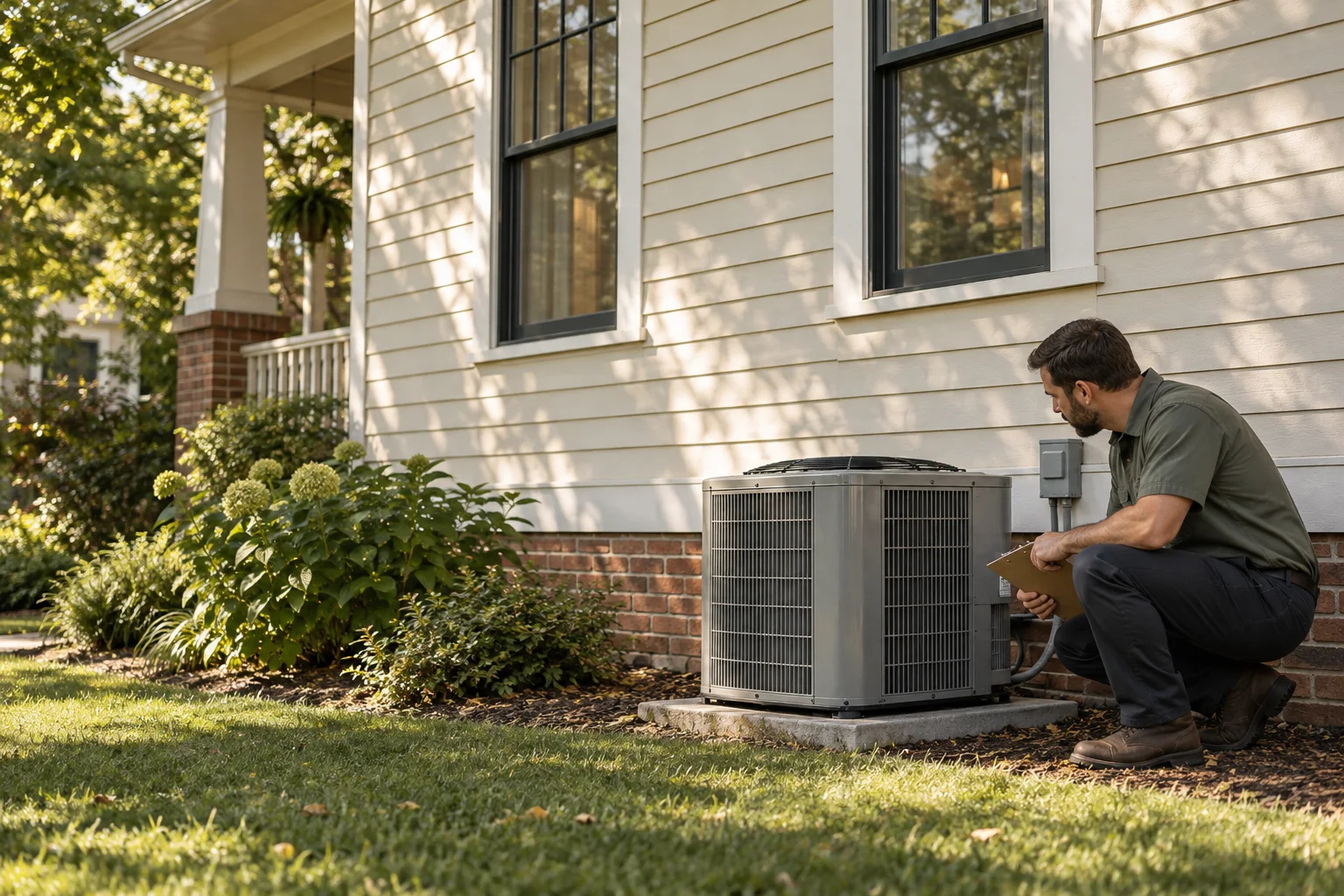
The first conversation covers the problem, general location, and any immediate concerns. A real crew would confirm coverage and appointment options.
A technician inspects the system and relevant conditions in the home. Symptoms help guide the checks; they don’t replace them.
You hear the findings, proposed work, and price before authorizing a repair. If there are alternatives, they belong in the conversation.
The work ends with checks, a walk-through, and clear notes. If another visit or part is needed, that should be explained too.
03 / A LITTLE ATTENTION, BEFORE THE SEASON
Maintenance is a chance to check condition, review performance, and catch questions before the weather puts the system to work.
A visit can include equipment checks, cleaning appropriate to the system, and a conversation about filters and care. The scope depends on the equipment; there’s no universal checklist that fits every home.
Try a maintenance inquiry04 / BEFORE YOU REACH OUT
A description helps a technician prepare, but it can’t confirm a diagnosis. An inspection is usually needed to identify the cause and discuss a suitable repair.
It depends on the fault, condition, repair history, and your plans for the home. A good assessment explains both routes without treating age alone as a reason to replace.
Your general location, a description of the issue, when it began, and the equipment type if you know it. You do not need to open the unit or identify a failed part.
No. Steady is a fictional Adrocity Studios concept. There is no real repair crew, booking availability, or emergency dispatch behind this website. The call action is an explanatory demo.
ONE CLEAR NEXT STEP
Fictional company. Explore the experience; nothing is sent.